Heat Awareness & Safety
 Each year, more than 200 people require rescue while hiking in parks and preserves. Plan ahead to stay safe and enjoy your visit.
- Know your limits and choose a trail that fits your ability
- Hike during cooler hours in warmer months
- Wear proper footwear, clothing, and sun protection
- Stay on designated trails and know your route
- Bring plenty of water for yourself, children, and pets
- Turn around when half your water is gone
- Tell someone your plans and carry a cell phone
- Avoid hiking alone when possible
For more safety information, visit the National Weather Service website.
Heat Exhaustion vs. Heat Stroke
Do you know the difference between heat exhaustion and heat stroke?
Heat Exhaustion
 Heat exhaustion is a milder form of heat-related illness that can develop after several days of exposure to high temperatures and inadequate or unbalanced replacement of fluids. Those most prone to heat exhaustion are elderly people, those with high blood pressure, and those working or exercising in a hot environment.
- Faint or dizzy
- Excessive sweating
- Cool, pale, clammy skin
- Nausea or vomiting
- Rapid, weak pulse
- Muscle cramps
What Should You Do?
- Get to a cooler, air conditioned place
- Drink water, if fully conscious
- Take a cool shower or use cold compresses
Heat Stroke
Heat stroke is the most serious heat-related illness. It occurs when the body becomes unable to control its temperature. The body's temperature rises rapidly, the sweating mechanism fails, and the body is unable to cool down. Body temperature may rise to 106°F or higher within 10 to 15 minutes. Heat stroke can cause death or permanent disability if emergency treatment is not provided.
- Throbbing headache
- No sweating
- Body temperature above 103°F
- Red, hot, dry skin
- Nausea or vomiting
- Rapid, strong pulse
- May lose consciousness
What Should You Do?
- CALL 9-1-1!!!
- Take immediate action to cool the person until help arrives.
Source: Maricopa County Public Health Dept.
Heat Stroke for Pets
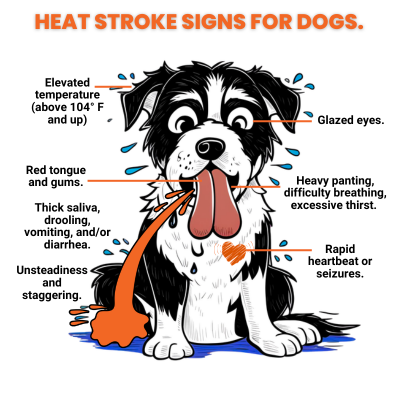 What are some of the telltale signs of heatstroke?
- Heavy panting, difficulty breathing, excessive thirst
- Bright red tongue and mucus membranes, which turn grey as shock sets in
- Thick saliva, drooling, vomiting, and/or diarrhea
- Unsteadiness and staggering
- Lethargy
- Elevated temperature
- Rapid heartbeat or seizures
During the summer months, keep in mind that heat radiates from the ground, and your pets are closer to it, making them more vulnerable.
Monsoon Awareness
During Monsoon Season:
 Avoid areas prone to flooding, such as washes, canyons, and low-lying areas.
- Move to higher ground before access is cut off by rising water.
- Do not plan long hikes in open areas during storms—conditions can change quickly.
- Never camp or park near creeks or washes where sudden flooding can occur.
- Stay informed by monitoring local weather alerts and forecasts.
- If advised to evacuate, leave immediately—conditions can worsen rapidly.
- Always let someone know your plans, especially if hiking alone, including your route and expected return time.
Source: Adapted from the National Oceanic and Atmospheric Administration
Safety Tips for Lightning Storms:
 Check the weather forecast before you hike and plan activities to reduce exposure to lightning.
- Identify the nearest safe shelter, such as a building or vehicle, and know how long it will take to get there.
- Stay alert—listen for thunder, watch for lightning, and track the direction of approaching storms.
- Be aware of hazards during and after storms, including flash floods and falling rocks.
- If a storm is approaching, seek shelter immediately.
- If camping, wait out the storm in a safe structure or vehicle—not a tent.
- Avoid touching metal surfaces on vehicles or structures during a storm.
Source: Adapted from the National Park Service
Current Weather Conditions & UV Index Conditions
The UV Index provides a forecast of the expected risk of overexposure to UV radiation from the sun. The National Weather Service calculates the UV Index forecast for most ZIP codes across the U.S., and EPA publishes this information. The UV Index is accompanied by recommendations for sun protection and is a useful tool for planning sun-safe outdoor activities.