What's In A Name?
Information adapted from: Hassayampa River Preserve, a brief history
Compiled by Jean Arrowsmith
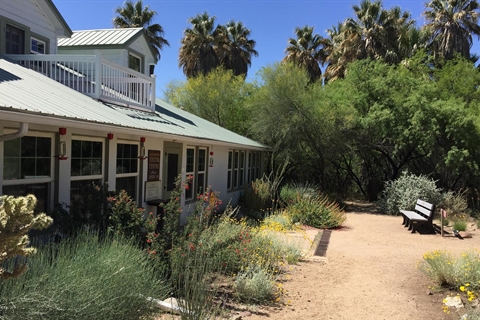 The Hassayampa River Preserve spans approximately 770 acres just south of Wickenburg, Arizona. It protects a rare stretch of the Hassayampa River—one of the few undammed rivers in the state.
The river begins in the Bradshaw Mountains near Prescott as a flowing mountain stream. As it reaches the desert floor, the water disappears underground, traveling beneath layers of sand and gravel. For most of its length, the river remains hidden below the surface.
At the preserve, however, the river rises above ground due to the underlying granite bedrock. This creates a year-round flowing oasis in the Sonoran Desert.
The name “Hassayampa” comes from the Yavapai language and is often interpreted as “follow the water as far as it goes,” reflecting the river’s unique underground journey.
An Oasis In The Desert
The Preserve’s iconic palm trees may date back more than 100 years. Historical accounts suggest they were brought to the area from Castle Hot Springs. These trees, along with the flowing river, create a lush habitat that supports a wide variety of wildlife.
The Early Settlers
A Brief History
Early Settlement
- 1866–1911: Frederick Brill, a Prussian immigrant, established a ranch on the property. He grew crops, raised livestock, and created one of Arizona’s earliest orchards. He also introduced carp farming—considered the first of its kind in the state. Brill owned the ranch for approximately 45 years until he passed away in 1911.
Dude Ranch Era
- 1913–1917: The property became the Garden of Allah dude ranch, attracting visitors seeking recreation and the health benefits of the desert climate. Guests often arrived by train at a nearby flag stop known as Allah Station. The Sanger Building was built during this time and is believed to have been the bunkhouse for ranch help.
Changing Ownership
- 1919–1970s: The land passed through several owners and uses, including a working ranch, winter residence, and later a proposed retirement community. Over time, the natural habitat became degraded.
Restoration and Preservation
- 1986: The Nature Conservancy purchased the property and began restoration efforts.
- 1987: The preserve reopened to the public.
- 2004: Additional land acquisitions expanded the preserve to approximately 770 acres.
- 2017: Maricopa County Parks and Recreation Department partnered with The Nature Conservancy to manage the preserve.
To learn the rest of the story, please stop by the Visitor’s Center.