Five-Acre Pollinator Garden
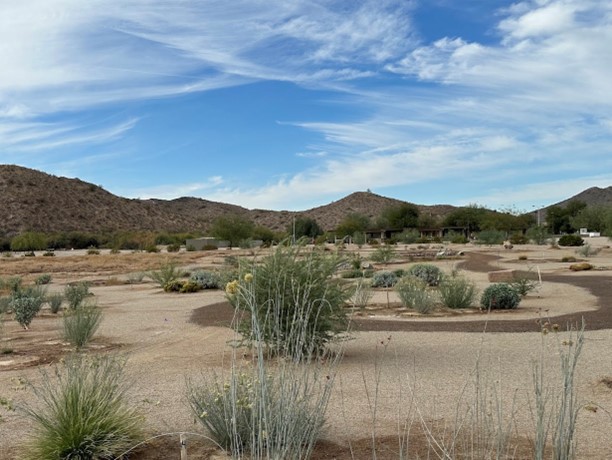 Maricopa County Parks & Recreation has partnered with the Wildlife Habitat Council (WHC) and Arizona State University (ASU) to transform five acres of irrigated turf into a water-efficient pollinator garden at Estrella Mountain Regional Park.
This project supports water conservation, habitat restoration, and biodiversity enhancement within the park.
Garden Features
The five-acre area includes:
- One-acre landscaped interpretive pollinator garden
- Four acres of natural desert-style pollinator habitat
- Two accessible Desert Botanical Garden (DBG) trails
- A water feature to support native wildlife and pollinators
The interpretive garden contains 28 pollinator pods, each planted with 10–11 species selected and arranged by color to attract a wide range of pollinators.
The surrounding four acres feature a more natural landscape design, with plantings dispersed throughout the area and extending along the Monarch Trail.
Volunteer & Community Support
Over the past three years, the project has hosted multiple volunteer events. More than 800 plants have been installed, including:
- 10 tree species
- 46 shrub and forb species
- 6 cactus species
The garden currently includes 62 total plant species (as of December 2024).
We extend a special thank you to the Desert Defender Volunteers and community volunteers who have contributed their time and expertise to this project.
Educational Features
The garden includes:
- A large interpretive sign explaining the importance of pollinator gardens
- A second large sign listing planted species with common and scientific names
- Smaller interpretive signs created by a local artist highlighting specific pollinators
A laminated Spanish version of the interpretive materials is available at the Nature Center. Visitors may also access information online using the on-site QR code.
Plant Species Highlights
Trees (10 species; over 300 planted)
- Blue Palo Verde
- Foothills Palo Verde
- Screwbean Mesquite
- Velvet Mesquite
- Arizona Ironwood
- Velvet Ash
Shrubs and Forbs (46 species; over 300 planted)
- Indian Mallow
- Globe Mallow
- Brownfoot
- Desert Honeysuckle
- Rush Milkweed
- Desert Milkweed
- Mohave Milkweed
- Desert Marigold
- Sweetbush
- Fairy Duster
- Wolfberry
- Hibiscus (Paleface and Desert Rose Mallow)
- Buttonbush
- Trixis
- Cous Senna
- And many more
Cacti (6 species; 18 planted)
- Saguaro
- Barrel Cactus
- Night Blooming Cereus
- Additional native cactus species
About the Project
Funding
The project was funded through a Healthy Urban Rivers Ecosystem Forest Grant from the Arizona Department of Forestry and Fire Management and the U.S. Forest Service.
Additional support was provided by:
- Arizona State University | Arizona Forward | CEMEX | Freeport-McMoRan | Desert Botanical Garden
Design & Ongoing Work
Maricopa County Parks & Recreation staff provided project design support, expertise, and labor. The garden remains an active restoration project, with continued efforts to increase biodiversity, introduce additional native species, and manage invasive weeds.
To learn more about the Pollinator Garden, please contact the Natural Resource Secialist at maricopacountyparks@maricopa.gov.